OPINION: This article may contain commentary which reflects the author’s opinion.
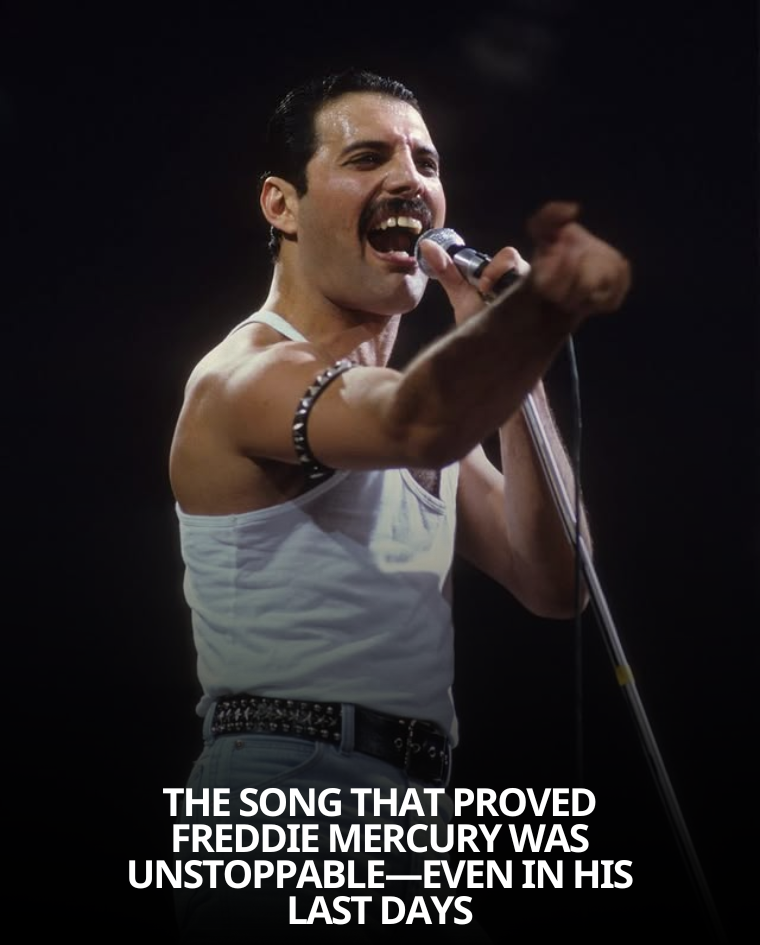
Freddie Mercury’s final moments in the spotlight were far from a quiet exit. The legendary Queen frontman, whose life had always been marked by relentless energy and unabashed individuality, proved one last time that the show would go on—even as he neared the end of his battle with AIDS. In November 1991, just a day before his death, Mercury’s passing became a heartbreaking reality for millions. But before that final curtain call, he left the world with a fitting farewell in The Show Must Go On, a song that encapsulated the unyielding spirit he embodied throughout his life.
In his final months, as his health deteriorated, Mercury continued to work on Queen’s last album, Innuendo. The album’s final track, The Show Must Go On, is not only a testament to Mercury’s incredible talent but also to his unwavering determination. The song stands as a rock anthem, charging through the noise with the kind of resilience Mercury was known for. Despite his physical frailty, Mercury’s voice soared with every note, proving that his heart—and his indomitable will—remained intact.
The song’s creation came with its own challenges. Brian May, Queen’s guitarist and close confidant, was concerned that the intensity of the anthem would be too much for the rapidly weakening Mercury. “I said, ‘Fred, I don’t know if this is going to be possible to sing,’” May recalled. But Mercury, as always, wasn’t about to be underestimated. With a defiant gleam in his eye and a bit of Dutch courage—vodka in hand—he insisted, “I’ll fucking do it, darling.” And true to form, Mercury entered the recording booth and delivered a performance so powerful, it left no doubt about his legendary status.
While May may not have written The Show Must Go On with Mercury’s imminent passing in mind, the lyrics seem to reflect the realities of his private life. With lines like “My makeup may be flaking, but my smile still stays on,” Mercury’s partner Jim Hutton recognized the truth in the words. To Hutton, the line was deeply autobiographical, encapsulating Freddie’s unwavering resolve to hide his suffering behind a smile, never seeking sympathy, even as his battle with illness grew harder.
Mercury recorded the entire song in one take, a feat that speaks volumes about his fierce dedication. As his health declined, he refused to give in to the weight of his circumstances. For Freddie, there was no option other than to give it his all. His voice, though fragile in its physical form, was an unstoppable force that refused to be silenced. In that moment, he was still the King of Queen, and the world would remember him as such.
The Show Must Go On was released as a single just six weeks before Mercury’s death, and fans immediately recognized the gravity of the moment. What had begun as a powerful anthem about perseverance became a poignant, unforgettable swan song. The song was not just a reflection of Mercury’s final days—it was a reminder of his immortality, his voice forever etched into the fabric of music history.
In a career that defied expectation and broke boundaries, Freddie Mercury proved, one last time, that no matter what life threw at him, the show would go on. The man may have passed, but the music, the legacy, and the spirit of Freddie Mercury will never die.